

The System Can't Fail If Nothing Counts as Failure
Low-demand frameworks like radical unschooling promise a solution to PDA school refusal. Have they just turned isolation into an ethos instead?

I dropped out of high school at 15. That choice literally saved my life and, contrary to the narrative of every after-school special featuring drop-outs, I have no regrets.
I wasn’t a child who historically struggled with school. I was a straight-A student (well, with the occasional B in math) until high school, a nerd whose preferred playground activity was reading quietly. I loved standardized testing.
Hell, I used to read the dictionary for fun.
At school, I spoke to adults like peers. If I thought my teacher was wrong, I would raise an objection, ask for sources, and propose alternative theories. In elementary school, teachers loved this. I was labeled as ‘precocious,’ placed in gifted programs, and generally showered with positive attention.
Ah, the honeymoon phase of being the weird kid.
I started getting bullied in second grade, when I first went to public school instead of Montessori, but nothing prepared me for middle school in a homogenous conservative midwestern town. I was a queer, fat, neurodivergent teen from a low-income household, and it was brutal.
Worse, adults were no longer a safe refuge. In middle school, the same behaviors that were once seen as ‘precocious’ were seen as ‘defiant.’
Picture thirteen-year-old me arguing that abstinence-only education wasn’t evidence-based with an instructor who quoted the Bible in class and showed us Sex, Lies & . . . The Truth, a sex-negative screed from Focus on the Family, a far-right extremist group.
It did not go well.
By high school, I was emotionally spent. I would intentionally get detention every day because it meant that I could eat my lunch in the quiet auditorium and read.
When I tried to talk to a school counselor about my severe depression, they said, “You’re fourteen—you don’t have to deal with anything really hard. What do you have to be depressed about?”
If they’d asked any follow up questions, they would have found a fourteen-year-old actively planning their own death. Instead, I was sent back to class.
And look, I was not a perfect, misunderstood angel. I adamantly rejected anything I interpreted as busywork or hoop-jumping. I was argumentative as hell—I once wrote a passive-aggressive essay around the thesis that the class was a useless waste of time. I illustrated it with a picture of me slowly melting while watching the classroom clock. I still stand by it.
Basically, I’m sure I could be very annoying, but that doesn’t excuse the fact that I was relentlessly bullied by peers and had no adults that I could turn to for help.
I was increasingly dysregulated at home, suffering from chronic migraines and struggling with ADHD and autism traits that wouldn’t be diagnosed for many more years.
The whole situation was, to put it bluntly, a catastrophic fucking mess.
Unschooling
A story like mine isn’t that uncommon. According to the PDA Society, 70% of PDA (Pathological Demand Avoidance) kids either aren't in school at all or struggle to attend regularly. That figure comes from a 2018 online survey, so it’s subjective, but even skeptics generally agree school refusal is common among kids with PDA traits.
The most common solution I see offered for school refusal in informal PDA support groups is the combination of ‘low-demand parenting’ and unschooling.
I’m not against unschooling. My three children have always been homeschooled, and we lean towards an eclectic, flexible homeschool style that’s heavily informed by a lot of unschooling ideas about self-directed, interest-led learning.
However, unlike many of my peers, I’m not opposed to basic homeschooling regulations, and I think it’s important that parents are aware that a lot of claims about unschooling are pulled out of thin air. The largest study I’m aware of is a self-selected survey of 75 previously unschooled adults.
Unschooling can look like anything except school.
It's hard to weigh in on unschooling because it can look like anything except conventional school. ‘Does unschooling work?’ is a bit like asking ‘Does free time work?’ a question vague enough to be meaningless.
One unschooled kid might be learning to identify plants at a nature preserve, while another has been locked in their bedroom for the last several hundred hours, racking up trophies on Call of Duty. I think most of us would agree that one of these situations is inherently more educational than the other, but ‘unschooling’ doesn’t really distinguish between them.
Basically, it’s not a method in the way that Montessori is—unschooling is only defined by what it isn’t.
In practice, I think the blend of unschooling and low-demand parenting recommended in PDA circles is functionally identical to another parenting philosophy I’ve explored: radical unschooling.
Radical Unschooling
Radical unschooling (RU) extends the unschooling philosophy beyond academics and into the rest of a kid’s life—food, sleep, screen time, hygiene, media content, social decisions, medical care, all of it. The idea is that children, given trust and respect, will naturally gravitate towards balance and self-regulation, and that dysfunction is usually a reaction to previous restrictions.
After my first kiddo was born, I joined Dayna Martin’s Radical Unschooling Facebook group. My partner and I knew we wanted to homeschool, but I was just starting to dig into the wide range of philosophies and methods. I wanted something child-led, egalitarian, responsive, and justice-oriented.
There was genuinely a lot to like. RU discourse leans on anti-authoritarian and anti-carceral thought, referencing disability justice, trauma-informed care, and mutual aid. RU reads, rhetorically, like a communitarian project: dismantle imposed hierarchies and replace them with relationships built on trust and consent.
I love all this shit. It makes my leftist heart so happy to dig into this kind of anti-authoritarian philosophy, but enjoying the discourse doesn't require blind trust in the framework.
When running from a broken system, how far is too far?
My partner used to be a public school teacher for a Title I middle school. In his experience, very few administrators showed any understanding of trauma-informed education—necessary, in his opinion, for the demographic his school served, where homelessness, food insecurity, and institutional racism were common challenges.
Instead, the school day was dominated by rigid physical control. Despite having only three minutes between classes, students weren't allowed to carry backpacks, and teachers were strongly discouraged from allowing in-class bathroom breaks.
Like many RU families, my partner uses carceral language to define his experiences, noting that administrators expected him to treat his students “like inmates.”
This isn't just rhetorical flourish—many American schools function like prisons. The National Association of School Psychologists found that cameras, metal detectors, and security guards don't make schools safer. The American Civil Liberties Union reports that in many states, school police outnumber social workers three to one.
So we've got lots of metal detectors but we’re all out of support personnel. Just the metal detectors. That’s fine. That seems fine.
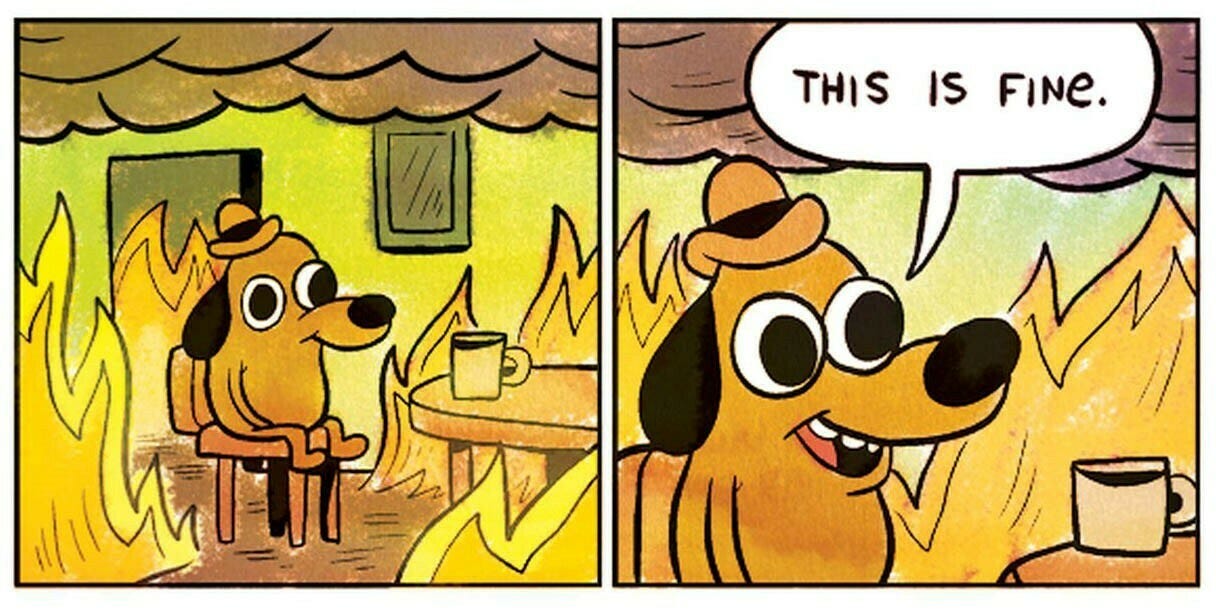
I completely understand why any family would reject this system, but walking away from a broken system isn't the same as building a functional one.
And in RU spaces, I frequently saw anecdotes that cast a harsh light on the potential downsides: the normalization of illiterate teens who hadn’t brushed their teeth or left their bedroom in months.
As a community, I think we need to be willing to explore the limits of our own frameworks. Where do idealistic philosophies born out of legitimate critiques start to curdle into something deeply unhealthy?
We can’t build healthy communities on rugged individualism.
While RU rhetoric often borrows the language of collective liberation, the practice remains firmly rooted in American individualism: one self-sufficient family, answerable to no one.
Healthy communities require skills that aren’t individually rewarding, at least not immediately—waiting our turn, compromising, accepting disappointment, listening to other people’s ideas, recognizing that someone else's needs sometimes outweigh yours.
A lot of RU guidance treats these basic, pro-social behaviors as coercive impositions to be avoided, rather than the normal reality of just . . . existing with other people.
If a child is never expected to adjust their behavior because expectations infringe on their autonomy, the parent is no longer a facilitator or even a family member—they’re a servant. The child learns that other people’s labor is a resource to be consumed, not a relationship to be reciprocated.
And that child, watching their parents play the martyr-servant to keep the peace, internalizes a terrifying message: freedom is entirely conditional on staying fragile and dependent. If the circumstances change—they grow more capable, grow up, become a partner or parent themselves—they could be expected to step into the servant role, too.
The system can't fail if nothing counts as failure.
Because RU explicitly distrusts authority, it also tends to distrust anyone checking in from outside. The same logic that says ‘don’t impose on your child’ gets extended to ‘don’t let anyone impose on your parenting.’ A pediatrician’s concern becomes medical coercion. A regulator’s questions become government overreach. Another homeschooler’s worry becomes judgment. Good-faith discussion becomes structurally impossible.
I just don’t think the answer to broken systems is no systems, ever.
If every critique is reframed as a hostile intrusion, the framework can’t fail—any hint of failure is preemptively ruled illegitimate. This creates an ideological fortress where the parents are shielded from any accountability. If the only feedback we accept is feedback that agrees with us, we aren’t protecting our children from a broken system. We’re denying them a safety net.
What happens when a radical unschooling parent struggles, burns out, or battles their own untreated mental health issues?
I used to know another homeschooling parent with neurodivergent children. The parent struggled with multiple mental illnesses and hoarding tendencies, including a basement pest infestation that had gone unaddressed for years. The home was so overwhelmed that the parent described it as rarely having “even one small area” clean for activities and projects.
The family hardly ever left the house, so this environment is where the children spent the vast majority of their lives.
The household’s response to a distressed child was acceptance—or maybe resignation, but definitely not collaboration or intervention, which the parent worried would be traumatic.
The Collaborative and Proactive Solutions model was deemed too complicated, and they didn’t pursue other avenues to increase personal or household function, stating that their current mental and emotional state was simply as good as it was ever going to get.
In retrospect, I think I pushed back on this a lot less than I should have in the hope of building rapport, but I did try to offer support without being enabling. When I agreed to help the family clean, I sent an e-mail clarifying that:
I was willing to help with “anything that makes progress towards more open, functional, easier-to-maintain spaces,” like cleaning, organizing, or finding professional resources.
But I wasn’t comfortable with “anything that hides disorder without addressing it and/or potentially worsens the situation over the long term,” like making doom boxes or stashing random things behind closed doors.
Shortly after, the parent ended our relationship, saying that the e-mail crossed a line and triggered them. They “didn’t want to accept help that came with so many conditions,” and felt unfairly judged.
This is what happens when a community decides that autonomy is the only metric with value. Help with boundaries is triggering. The standard that children should have a reasonably clean, safe home is judgment. There’s no version of ‘here’s what I can offer’ that can survive contact with an ideology where expectations are inherently offensive.
And a child in that house doesn’t get a vote on which ideology their parent internalizes.
If public schools let a kid fall through the cracks, there’s at least a theoretical path of recourse—a school board, a transfer, a lawsuit, whatever. Many RU children are entirely at the mercy of their parents’ capacity, sanity, and goodwill.
This is the paradox of ‘low-demand.’ A child in this situation appears to have total, unrestricted autonomy, but true autonomy requires choices, and the child did not choose this.
In a closed system, ‘child-led’ risks becoming a euphemism for ‘parent-neglected.’
I think a healthy parenting framework needs to function like a semi-permeable membrane: strong enough to protect the family from real overreach, but open enough to let information and support filter in from the outside.
And if our framework can’t stand up to any outside scrutiny, I think it’s worth asking if it’s really the foundation we want to use to raise our children.
What do we owe each other?
Many RU and similar ‘low-demand’ communities answer this question with a shrug, reducing our obligations to nothing more than mutual non-interference. But I think interdependence means accepting that we’re social animals, characterized by the messy, necessary work of cooperating with other people.
Kahlil Gibran’s poem On Children (which I love) circulates a lot in RU communities, and it reads, in part:
Your children are not your children.
They are the sons and daughters of Life’s longing for itself.
They come through you but not from you,
And though they are with you yet they belong not to you.
It's a poem about freedom from the parent, specifically—from ego, from the urge to reproduce ourselves in our kids—not freedom from every obligation. Our children don't belong to us, but they don't belong solely to themselves either. They belong to a society that extends far beyond our front doors.
In PDA parenting circles, I think we owe each other honesty over reassurance. The kindest thing to say isn’t always the most validating one, and a community that only ever soothes stops being useful the moment complexity enters the chat. We need spaces that can hold a history of institutional failures without decaying into a paranoia that silences every dissenting voice.
When we refuse all outside input, we aren't protecting our children from a broken system. We’re robbing them of the right to be seen, supported, and protected by a wider circle of care—the society to which they belong. True community means accepting that our parenting should be visible, vulnerable, and open to checks-and-balances. We can’t cure institutional harms by building more intimate prisons of our own.